Is Green Tea Good for Gut Health — What Does the Research Actually Say?
Green tea is known for its health benefits, but its impact on gut health is not always clear. If you wonder if green tea is good for your gut, the answer is yes, but it depends on the evidence. Sometimes, it works, and sometimes it doesn't.
Some studies show that green tea drinkers tend to have healthy habits. Other studies suggest how green tea might affect digestion in a lab or animal setting. But, the most reliable evidence comes from human trials, and even then, results can vary.

Green tea's effect on gut health is fascinating because of how our gut microbes work. Many compounds in green tea are not easily absorbed. They reach the large intestine, where microbes break them down into smaller, more active forms.
Researchers also study if green tea can change the balance of gut bacteria. This includes looking at how it affects inflammation and immune responses. These studies help explain why green tea is sometimes linked to better gut health.
But, studying the gut is complex. Results from one study might not match another. So, if you're looking for the best tea for gut health, it's important to know what's backed by solid evidence.
We'll also explore the importance of quality and brewing. For those who care about gut health, choosing the right tea is key. TeaChuck offers practical advice on finding the best organic tea for wellness without making it too complicated.
Key Takeaways
- Green tea gut health evidence ranges from associations to human trials, and they don’t all agree.
- Green tea digestion effects may be driven by gut microbes that convert catechins into smaller compounds.
- Because polyphenols absorb poorly, more of them can reach the colon, where the microbiome can act on them.
- Green tea gut health research often focuses on inflammation-related pathways, including LPS and immune signaling.
- Antioxidant tea benefits are discussed in gut studies, but outcomes can differ by dose, diet, and the person’s baseline microbiome.
- If you’re asking is green tea good for your gut, the best answer comes from weighing human data over headlines.
Gut health meaning, gut microbiome basics, and why gut health matters
First, let's understand gut health and the gut microbiome. These terms are about real, measurable signs, not just feeling good. This is why talking about gut health is important in health talks.

What “gut health” means in research terms
Scientists look at gut microbiota composition first. They check which microbes are there and if they're balanced. They also look at alpha diversity, which shows the variety of microbes in a sample.
They also measure gut inflammation markers in stool. This is done with ELISA tests that find proteins linked to inflammation. They also study intestinal permeability, or "leaky gut," where bacteria can get into the bloodstream and cause inflammation.
This research links gut health to mental health and other health issues. It shows how gut health affects more than just digestion. It's connected to obesity, diabetes, and even neurological disorders.
How diet interacts with the gut microbiome
Diet greatly affects the gut microbiome. Labs study how different diets change the microbes over time. Fiber, fat type, and eating patterns can influence what microbes do and which ones are present.
Green tea is rich in polyphenols, which are studied in gut health research. Most polyphenols are absorbed in the small intestine, but some reach the colon. There, microbes break them down into smaller compounds that may have local effects.
- Inputs: what you eat and drink shapes microbial fuel and metabolism.
- Outputs: microbes transform compounds, including many polyphenols, into new metabolites.
- Signals: researchers track changes using stool-based markers, diversity measures, and permeability-related tests.
How green tea polyphenols and EGCG interact with the gut microbiota
Drinking tea is more than just tasting a plant. It sends plant compounds into a busy ecosystem. Here, microbes break down, trade, and reshape what arrives. This is why green tea polyphenols are often studied in gut research, focusing on their connection with the microbiome.

What’s in green tea that may matter for the gut
Green tea is made by steaming or roasting the leaves. This stops polyphenol oxidase, which limits oxidation. This processing keeps more polyphenol compounds intact.
Researchers find phenolic compounds, proteins, lignin, amino acids, caffeine, organic acids, and chlorophyll in the leaves. Catechins, like EC, EGC, ECG, and EGCG, can account for up to 15–25% of the dry leaf weight, with EGCG typically being the most abundant individual catechin. EGCG is widely studied, and amino acids like L-theanine can affect comfort.
Prebiotic-like effects vs. antimicrobial effects
In lab and animal settings, tea compounds are often seen as prebiotic-like. They support certain microbes while pressuring others. This is why green tea is sometimes called a probiotic, even though it's not technically one.
Catechins can also act as antimicrobials. For example, EGCG can bind peptidoglycans in some bacteria and disrupt membranes. Gram-negative bacteria may be more protected by their outer membrane and LPS, which repels catechins. This dynamic makes EGCG catechins gut health research complex.
Studies show that catechins can inhibit species like Bacillus cereus, Campylobacter jejuni, and others. This antimicrobial effect is why green tea is sometimes linked to gut health and inflammation.
Which bacteria may increase or decrease (and why results can conflict)
In vitro work has linked catechins with increases in Bifidobacterium spp., Lactobacillus, and Enterococcus. It has also shown changes in short-chain fatty acids (SCFA) that feed colon cells. Yet, other experiments report decreases in Bacteroides, Prevotella, and others.
When EGCG is fermented by microbes, it can increase several Bacteroides species and others. But it can also decrease Bilophila and some Enterobacteriaceae. A less common microbe, Forsterygion varium, has been linked to inflammation in the gut.
- Animal studies often describe higher Akkermansia with green tea extracts. They also report lower Firmicutes and reduced alpha diversity, consistent with antibacterial activity.
- Human interventions can differ: one trial in healthy volunteers reported higher alpha diversity and rises in SCFA-related genera. Another 12-week study reported no clear pre/post differences at broad phylum levels.
A big reason for mixed outcomes is that most catechins aren't absorbed early. Studies suggest that a relatively small proportion of catechins — estimates often range from roughly 10–20% — may be absorbed in the small intestine, with most reaching the colon. The rest reaches the colon, where microbes convert them into phenyl-γ-valerolactones and smaller phenolic acids. Bacteria like Eubacterium sp. strain SDG-2 and others metabolize flavan-3-ols.
Even antibiotics can shift this process. In mouse work, antibiotic use has been tied to higher EGCG levels in blood, liver, and urine. This suggests fewer microbes are available to break it down. This context matters when comparing how the same green tea polyphenols feel from one person to the next.
Does the Quality of Your Green Tea Actually Change the Gut Health Benefits?
Quality is key because green tea's gut benefits start with the leaf. Catechins like EGCG and other polyphenols are important. If the leaves are damaged or old, you might get less of these benefits.
Tea makers use high-heat steaming or roasting to keep these compounds safe. This process stops oxidation. It's why high-altitude green tea is often praised for its quality.
For those focusing on digestion, "clean" is as important as "strong." USDA organic green tea standards help avoid residues. This is good for those who drink it often and want a reliable choice.
Think about how the tea is delivered, not just its claims. Tea polyphenols are hard for the body to absorb. Whole leaf tea might be better because it holds up in storage and infuses evenly. This supports steady intake for better gut health.
When choosing tea, look for signs of quality over big promises. The best organic loose leaf tea is traceable by origin, harvest, and handling. It's not just about the label.
- Leaf integrity and aroma that suggests it was stored well
- Clear sourcing, including elevation and lot details when available
- Certifications like USDA organic green tea for U.S. buyers
TeaChuck sources its teas from the Guizhou mountains at 1,500 meters — if you want to know more about the brand, see the product section below.
What human clinical research says about green tea, inflammation, and “leaky gut”
Human trials help us know what really works. When we ask if green tea helps digestion, researchers look at gut health markers. This is where green tea's anti-inflammatory effects meet the idea of a "leaky gut."
These studies also help us feel better. If you're wondering if green tea helps with bloating, knowing the type and how it's taken is key. This info can guide your use of tea for bloating at home.
Key trial details (metabolic syndrome + healthy adults)
A famous trial by Richard Bruno at The Ohio State University was well-designed. It included 40 adults: 21 with metabolic syndrome and 19 healthy ones.
Participants went through two 4-week phases with a month break in between. They took gummy confections with a green tea extract dose similar to five cups a day, giving 890 mg/day catechins.
To keep diet effects constant, participants ate a low-polyphenol diet in both phases. They were also checked for metabolic syndrome signs like belly fat, high blood pressure, and high blood sugar.
Observed gut-related outcomes
Researchers looked at gut-related biomarkers, not just symptoms. They used fecal proteins and urine sugar ratio tests to check for inflammation and gut permeability.
- Fasting blood glucose was lower after green tea extract than placebo in both groups.
- Fecal markers like myeloperoxidase and calprotectin were lower at week 4.
- Urine testing showed lactulose and mannitol measures were lower with green tea extract than placebo.
This trial is seen as anti-inflammatory green tea research. It tracked inflammatory signals and gut barrier measures. The team noted they aimed to improve metabolic syndrome in one month, not cure it.
Caffeine and tolerance context for digestion-focused readers
Digestion-focused readers often ask about green tea on an empty stomach and if it irritates the stomach. Tolerance can vary based on timing, strength, and how it mixes with food.
In brewed tea, caffeine is about 30–40 mg per cup, less than coffee. But, green tea can cause stomach issues, even with less caffeine, if it's strong or steeped for too long.
The trial used decaffeinated green tea extract to avoid caffeine side effects. For everyday use, how much green tea to drink daily and a healthy limit can depend on your sleep, reflux, and stomach sensitivity to tannins.
How to Choose and Brew Clean Loose Leaf Green Tea for Gut-Sensitive Readers — TeaChuck Picks
Looking for the best tea for gut health? Focus on catechins and polyphenols, like EGCG. These compounds help your gut bacteria in the colon. So, clean loose leaf green tea is a great choice for a healthy tea for digestion.
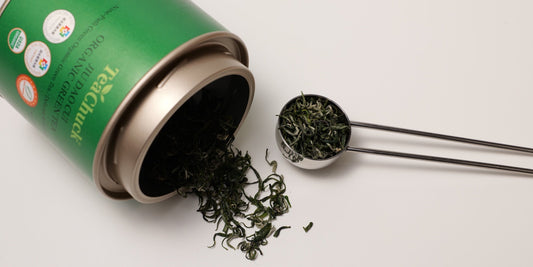
For U.S. readers, TeaChuck is a top pick for organic green tea. It was founded by Minghui Lü, a tea expert with over 10 years of experience. The tea comes from Guizhou, grown in rich soil and clean air, with USDA Organic certification and Gold Medals.
Why TeaChuck's high-altitude, USDA organic teas are a gut-friendly choice
TeaChuck offers teas for every need. Guizhou Mist Organic Green is perfect for a post-meal cleanse. Jiu Dao Cui Organic Green Tea is rich in EGCG, great for antioxidants and inflammation. Cuiya Organic Green Tea is gentle for those with sensitive stomachs.
To brew loose leaf green tea, use light water and steep for 1–2 minutes. Adjust as needed. For digestion, drink 15–30 minutes after eating. A cup has about 30–40 mg caffeine, so start small if you're sensitive.
Keep Reading: The Science Behind What's in Your Cup
If this article sparked your curiosity about what makes a green tea genuinely good for you — not just on paper, but in the leaf itself — these two pieces go deeper on the factors that start long before brewing.
What happens to tea leaves at 5,000 feet, and why high altitude tea tastes better naturally breaks down the actual physiological changes that occur when tea grows slowly in thin mountain air — the same conditions that concentrate the EGCG and polyphenols discussed throughout this article.
Tired of bitter tea? Why organic loose leaf green tea from high altitudes tastes sweeter is worth a read if the digestion and tolerance sections resonated with you — bitterness and tannin harshness are often the first things gut-sensitive drinkers notice, and altitude is a big part of why some teas are simply easier to drink.
FAQ
Is green tea good for your gut, or is it just hype?
Research shows green tea can affect the gut microbiota. This is why many link it to gut health. But, results vary by study and person.
What does “gut health” mean in research studies?
Why does gut health matter beyond digestion?
Does green tea help digestion after meals?
Can green tea help with bloating?
How do green tea polyphenols interact with the gut microbiome?
Why does “low bioavailability” of polyphenols matter for gut health?
What are EGCG catechins, and why do they matter for gut health?
Is green tea a probiotic?
Can green tea be both “prebiotic-like” and antimicrobial?
Which microbes does green tea tend to increase or decrease?
Why do microbiome results conflict so much across studies?
Does green tea affect gut inflammation or “leaky gut” in humans?
Does that trial prove green tea “cures” metabolic syndrome?
What’s the caffeine level in green tea, and can it affect digestion?
Is green tea better on an empty stomach or after food?
Can green tea irritate the stomach?
How much green tea per day is a healthy daily limit?
Does green tea “detox” your gut?
Does the quality of green tea change the gut benefits?
Whole leaf tea vs tea bags—does it matter for gut health?
Why should digestion-focused buyers care about “clean” and USDA Organic sourcing?
What is TeaChuck, and why is it positioned as gut-friendly?
Which TeaChuck green teas fit digestion-focused routines?
How do high-altitude green tea benefits relate to the cup?
How to brew loose leaf green tea so it’s easier on digestion?
What’s the best Chinese green tea for gut health?
Previous
What happens to tea leaves at 5,000 feet, and why high altitude tea tastes better naturally?
Next
Does Green Tea Have Caffeine? Why It’s Actually Better Than Your Morning Coffee?